
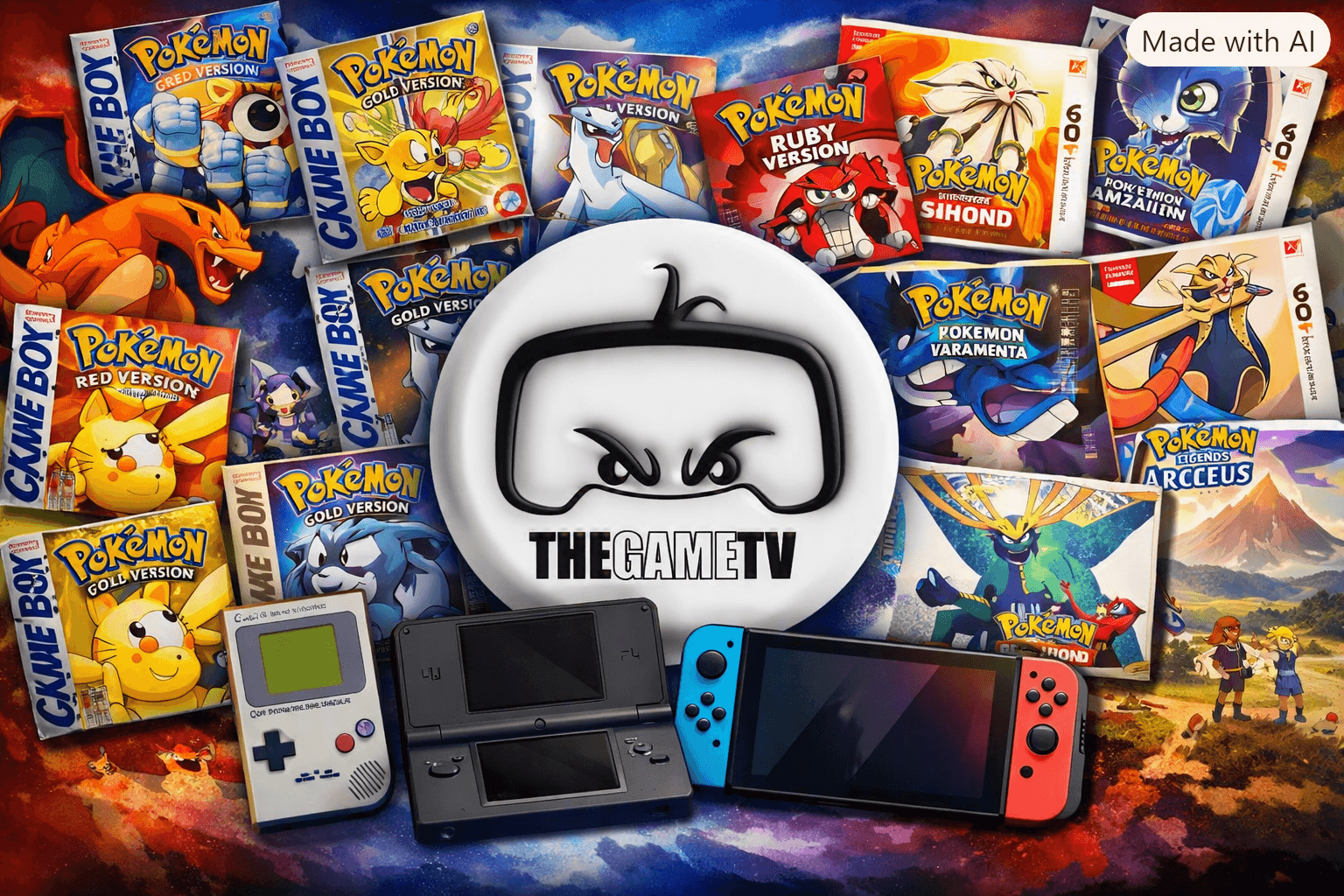
Here’s the Complete History of Pokémon Games. Few video game franchises have had the cultural impact, commercial success, and longevity of Pokémon. Since its debut in 1996, the series has sold more than 500 million game copies worldwide and evolved from a pair of Game Boy cartridges into one of the largest entertainment franchises ever created.
Across nearly three decades, Pokémon has continuously reinvented itself while keeping the same core concept that captivated players from the beginning: explore a vibrant world, capture creatures, train them, and become the very best.
From the pixelated landscapes of Kanto to the open-world freedom of Paldea, this is the complete history of Pokémon games and how the franchise became a global phenomenon.
Table of Contents
The Origins of Pokémon
Pokémon was created by Satoshi Tajiri, a Japanese game designer whose childhood hobby was collecting insects in rural Japan. As cities expanded and natural spaces disappeared, Tajiri imagined creating a game that would replicate the thrill of discovery and collecting creatures.
Together with illustrator Ken Sugimori and the team at Game Freak, Tajiri spent approximately six years developing what would become Pokémon Red and Green.
The concept was revolutionary for its time. Players could not only capture and train creatures but also trade them with friends using Nintendo’s Game Boy Link Cable. This social element became one of Pokémon’s defining features and remains central to the franchise today.
The original Japanese releases launched on February 27, 1996, a date now celebrated annually as Pokémon Day.
Generation I: Red, Green, Blue and Yellow (1996–1999)
Region: Kanto
The original games introduced players to the Kanto region and 151 Pokémon.
At first, Pokémon enjoyed moderate success in Japan. However, word-of-mouth recommendations, schoolyard trading, and rumors surrounding mysterious hidden creatures like Mew generated an explosion in popularity.
When Pokémon Red and Blue launched internationally in 1998, the franchise rapidly became a worldwide sensation.
Key Innovations
- Pokémon collection and evolution
- Link Cable trading
- Turn-based battles
- Gym Leaders and Elite Four
- Version exclusives encouraging player interaction
Cultural Impact
Generation I triggered “Pokémania,” a global craze that extended beyond gaming into television, toys, movies, and trading cards.
Even today, Pikachu, Charizard, Mewtwo, and the original starters remain among the most recognizable characters in gaming history.
Generation II: Gold, Silver and Crystal (1999–2002)
Region: Johto
Instead of simply repeating the formula, Game Freak dramatically expanded it.
Gold and Silver introduced 100 new Pokémon while adding numerous mechanics that remain fundamental today.
Many fans still consider Generation II one of the greatest achievements in the history of the franchise.
Major Features
- Real-time day and night cycle
- Pokémon breeding
- Baby Pokémon
- Held items
- Dark and Steel types
- Shiny Pokémon
The most remarkable feature was the ability to revisit Kanto after completing Johto, effectively providing an entire second game as post-game content.
Generation III: Ruby, Sapphire, Emerald, FireRed and LeafGreen (2002–2006)
Region: Hoenn
The move to Game Boy Advance represented Pokémon’s first major technological leap.
Graphics became more colorful, animations improved, and the games felt significantly larger.
Generation III introduced many mechanics that eventually became essential to competitive play.
Major Innovations
- Abilities
- Natures
- Double Battles
- Pokémon Contests
- Dynamic weather systems
At the same time, FireRed and LeafGreen established Pokémon’s long-running remake tradition by modernizing the original Kanto adventures.
Generation IV: Diamond, Pearl, Platinum, HeartGold and SoulSilver (2006–2010)
Region: Sinnoh
Generation IV brought Pokémon into the online era thanks to Nintendo DS Wi-Fi functionality.
For the first time, players could battle and trade worldwide from their handheld console.
Revolutionary Changes
The most important gameplay change was the Physical/Special Split.
Before this update, attacks were categorized by type. After Generation IV, each move individually became physical or special.
This dramatically increased battle depth and remains one of the most significant competitive changes in series history.
Other Features
- Global Trade Station (GTS)
- Online battles
- Expanded lore surrounding Arceus
- Touch-screen functionality
- Pokéwalker accessory
HeartGold and SoulSilver later became widely regarded as some of the finest remakes ever created.
Generation V: Black, White, Black 2 and White 2 (2010–2013)
Region: Unova
Inspired by New York City, Unova represented Pokémon’s most ambitious storytelling effort.
Generation V introduced 156 new Pokémon, still the largest number ever added in a single generation.
Unlike previous games, Black and White focused heavily on narrative and character development.
A More Mature Story
Team Plasma questioned whether Pokémon should be owned by humans.
Their mysterious leader N became one of the most beloved characters in franchise history thanks to his complex motivations and moral ambiguity.
Key Features
- Fully animated battle sprites
- Dynamic camera angles
- Seasonal changes
- Narrative-driven storytelling
- Direct sequels (Black 2 and White 2)
Today, many fans view Generation V as one of the most underrated periods in Pokémon history.
Generation VI: X, Y, Omega Ruby and Alpha Sapphire (2013–2016)
Region: Kalos
Generation VI changed Pokémon forever by introducing full 3D graphics.
For the first time, Pokémon, trainers, and environments were fully modeled in three dimensions.
Mega Evolution
The headline feature was Mega Evolution.
Certain Pokémon could temporarily transform during battle, gaining new abilities, stats, and appearances.
Fan favorites such as Charizard, Lucario, Gengar, and Blaziken received powerful Mega forms that quickly became central to competitive play.
Additional Features
- Fairy type introduction
- Character customization
- Pokémon-Amie
- Global simultaneous release
- Enhanced online functionality
The Fairy type also balanced Dragon Pokémon, which had dominated competitive battling for years.
Generation VII: Sun, Moon, Ultra Sun, Ultra Moon and Let’s Go (2016–2019)
Region: Alola
Inspired by Hawaii, Alola abandoned many long-standing traditions.
Instead of traditional Gym battles, players completed island trials and challenged powerful Totem Pokémon.
Major Innovations
- Regional forms
- Z-Moves
- Ultra Beasts
- Trials replacing Gyms
- Stronger story focus
Generation VII also introduced Alolan Forms, giving classic Pokémon entirely new appearances and typings.
Meanwhile, Let’s Go Pikachu and Let’s Go Eevee brought Pokémon to Nintendo Switch for the first time while incorporating mechanics from Pokémon GO.
Generation VIII: Sword, Shield and Legends: Arceus (2019–2022)
Region: Galar
Generation VIII marked Pokémon’s full transition to Nintendo Switch.
Sword and Shield introduced the Wild Area, a large zone that hinted at the open-world future of the franchise.
New Features
- Dynamax
- Gigantamax
- Raid Battles
- Wild Area exploration
- Downloadable expansions
However, the generation also sparked controversy after Game Freak confirmed not every Pokémon would appear in the games.
The resulting backlash became known as “Dexit.”
The Importance of Legends: Arceus
Released in 2022, Pokémon Legends: Arceus fundamentally changed the formula.
It emphasized exploration, research, stealth mechanics, and action-based catching.
Many players consider it one of the freshest and most innovative Pokémon experiences ever created.
Generation IX: Scarlet, Violet and Pokémon Legends: Z-A (2022–Present)
Region: Paldea
Inspired by Spain and Portugal, Paldea delivered Pokémon’s first truly open-world adventure.
Players could explore nearly anywhere from the beginning and complete multiple storylines in any order.
Defining Features
- Fully open-world structure
- Co-op multiplayer
- Terastallization mechanic
- Nonlinear progression
- Massive exploration freedom
Although performance issues initially generated criticism, Scarlet and Violet quickly became some of Nintendo’s fastest-selling titles ever.
Pokémon Legends: Z-A continues the franchise’s experimental direction and demonstrates Game Freak’s growing willingness to innovate.
The Most Important Pokémon Spin-Off Games
While the mainline RPGs attract most of the attention, spin-offs have played a crucial role in Pokémon’s success.
Pokémon GO
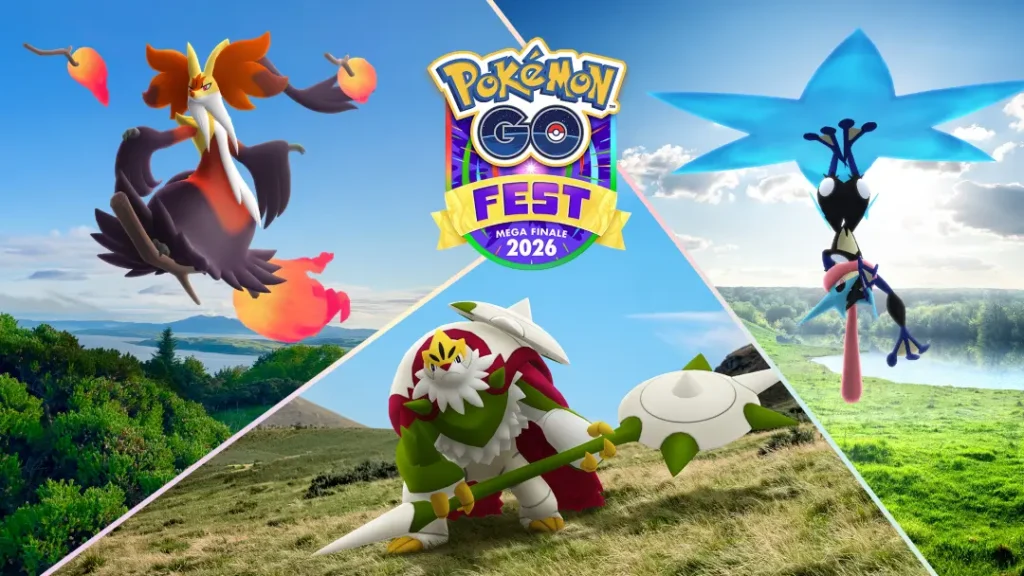
The 2016 augmented-reality phenomenon encouraged players to explore the real world while catching Pokémon.
Pokémon Mystery Dungeon
A beloved RPG series where players become Pokémon and explore randomly generated dungeons.
Pokémon Snap
An innovative photography game focused on observing Pokémon in their natural habitats.
Pokémon Stadium
One of the first opportunities to see Pokémon battles fully rendered in 3D.
Pokémon Unite
A multiplayer online battle arena (MOBA) that brought Pokémon into the competitive esports space.
Why Pokémon Has Survived for Nearly 30 Years
Very few gaming franchises remain relevant across multiple generations.
Pokémon has achieved this through a unique combination of:
- Continuous innovation
- Strong nostalgia appeal
- Deep competitive gameplay
- Family-friendly accessibility
- Consistent introduction of new Pokémon
- Cross-media support from anime and TCG
Each generation evolves the formula while preserving the core experience that fans love.
The Future of Pokémon
As Pokémon approaches its fourth decade, the franchise shows no signs of slowing down.
The success of open-world exploration, multiplayer features, and the Legends subseries suggests that future titles will continue pushing the boundaries of what a Pokémon adventure can be.
Whether players began their journey with Red and Blue in the 1990s or with Scarlet and Violet today, the appeal remains the same: discovering new creatures, building a team, and embarking on an unforgettable adventure.
Conclusion
The history of Pokémon games is ultimately a story of constant evolution.
From humble Game Boy beginnings to expansive open-world adventures, the franchise has continually adapted to new technologies, changing player expectations, and emerging gaming trends.
Nearly thirty years after its debut, Pokémon remains one of the most influential, recognizable, and beloved franchises in gaming history. And if recent releases are any indication, the journey is far from over.
FAQs
What is the best Pokémon game for beginners?
For new players, Pokémon Let’s Go Pikachu and Let’s Go Eevee are often considered the most accessible entry points. Their simplified mechanics, modern visuals, and intuitive controls make them ideal for newcomers. Players looking for a more traditional experience may prefer Pokémon Scarlet and Violet, which offer modern gameplay while preserving the franchise’s core mechanics.
Which Pokémon generation introduced the most new Pokémon?
Generation V introduced the largest number of new Pokémon. Pokémon Black and White added 156 new species, surpassing every other generation in the franchise’s history.
What is the best-selling Pokémon game of all time?
The original Pokémon Red, Green, Blue, and Yellow titles remain the best-selling Pokémon games ever released. Collectively, they sold more than 45 million copies worldwide and were instrumental in creating the global Pokémon phenomenon.
Are all Pokémon games connected?
Most Pokémon games take place within the same universe but in different regions. While each generation tells a largely independent story, recurring characters, organizations, legendary Pokémon, and historical events link the games together. Some titles, such as Black 2 and White 2, are direct sequels.
What are Pokémon remakes?
Pokémon remakes are modern recreations of older games. They typically feature updated graphics, quality-of-life improvements, new mechanics, and expanded content while preserving the original story. Notable examples include HeartGold and SoulSilver, Omega Ruby and Alpha Sapphire, and Brilliant Diamond and Shining Pearl.
Which Pokémon game introduced open-world gameplay?
Pokémon Legends: Arceus pioneered large-scale exploration and seamless navigation, but Pokémon Scarlet and Violet became the first fully open-world mainline Pokémon games, allowing players to complete objectives in a non-linear order.
What is Pokémon HOME?
Pokémon HOME is a cloud-based storage service that enables players to transfer Pokémon between compatible games and maintain a long-term collection. It serves as the modern successor to services such as Pokémon Bank and greatly simplifies cross-generation transfers.
Will there be more Pokémon games in the future?
Absolutely. Pokémon remains one of Nintendo’s most valuable franchises, and Game Freak continues to develop new mainline entries, remakes, spin-offs, and experimental projects. The success of the Legends series suggests the franchise will continue exploring new gameplay ideas alongside traditional Pokémon adventures.
Leave a Reply
You must be logged in to post a comment.